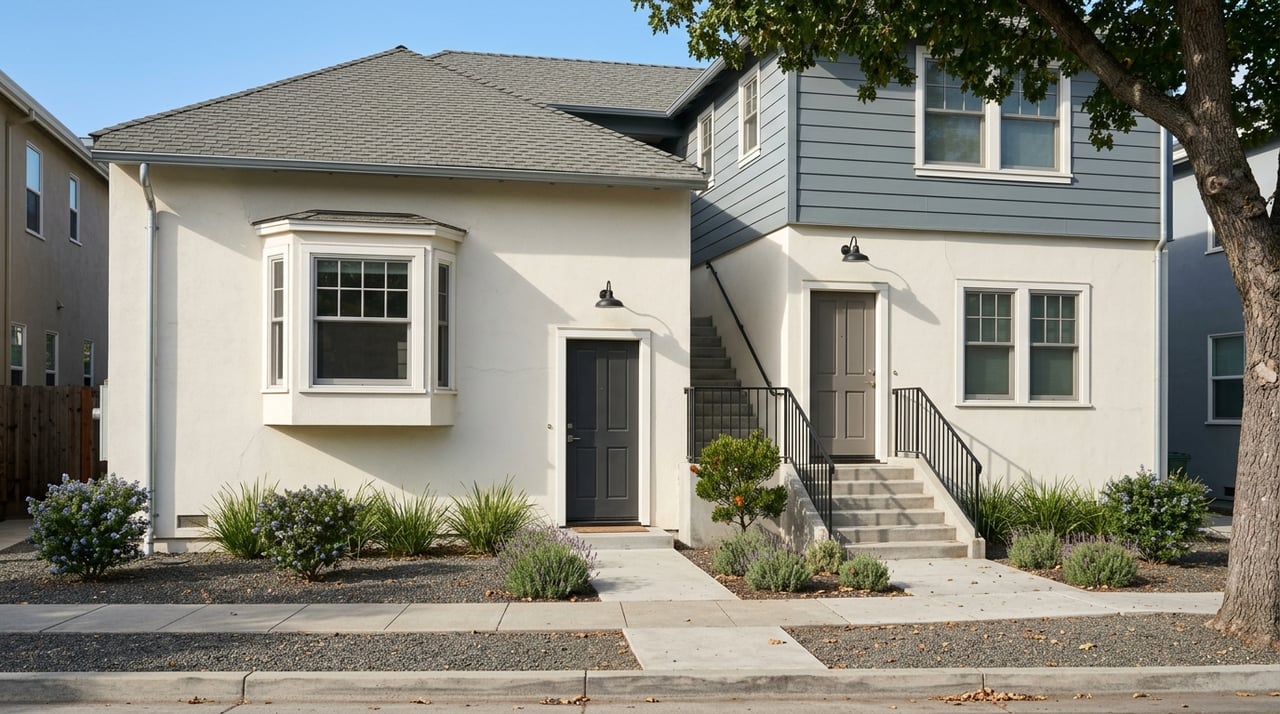
Trying to buy in Oakland without stretching your budget to the limit? House hacking can be one of the most practical ways to make ownership more manageable, especially if you want rental income to help offset your monthly costs. The key is that in Oakland, a good house hack is not just about finding extra space. It is about matching the property to local rules, financing guidelines, and your long-term plan. Let’s dive in.
What House Hacking Means in Oakland
In simple terms, house hacking means you live in part of the property and rent out another part. In Oakland, that usually looks like one of three setups:
- An owner-occupied duplex or triplex
- A single-family home with an ADU or JADU
- A primary residence with one or more rented rooms
Each option can help reduce your housing costs, but each one comes with a different mix of zoning, rental-law, and financing considerations.
According to the City of Oakland ADU guidance, ADUs are allowed on single-family and multi-family properties, and they may be rented for long-term stays only, meaning 30 days or longer. That long-term requirement matters if part of your plan depends on projected rental income.
Best Oakland House Hacking Setups
Duplexes and Triplexes
For many buyers, a duplex or triplex is the most straightforward house-hacking model. You occupy one unit and rent the other unit or units, which can create more separation and privacy than renting rooms in a single home.
That said, Oakland treats these as real rental relationships. The city’s Guide to Oakland Rental Housing Law notes that just-cause rules apply to most rental units, including owner-occupied duplexes and triplexes. If you buy this type of property, you should be ready to operate it like a landlord, with proper documentation, registration, and compliance.
Single-Family Homes With ADUs or JADUs
A single-family home with a legal accessory unit can offer more flexibility. You may live in the main house and rent the ADU, or in some cases live in the ADU and use the main home differently, depending on your financing and occupancy requirements.
Oakland allows multiple ADU pathways. On single-family lots, the city says you may be able to combine one Category One ADU, one Category Two ADU, and one JADU, for up to three ADUs total. The city also offers pre-approved ADU plans, which can help speed approval, lower permit fees, and potentially reduce project costs.
Room Rentals
Room rentals can be the lowest-cost entry point because you may not need a separate legal unit. If your goal is simply to offset part of your mortgage, renting a bedroom in your primary residence may work.
But in Oakland, this route is not always simple. The city states that renting or subletting rooms is treated as a business activity for tax purposes, and room-by-room leasing can affect rent-control analysis. Before you count on this strategy, it is smart to review how the setup may affect local compliance and your financing plan.
Oakland Rules You Need to Know First
Rent Adjustment and Just Cause
Oakland’s rental rules depend heavily on the age of the property and how the space is rented. The city says the Rent Adjustment Ordinance generally covers most multifamily properties built before January 1, 1983, while the just-cause ordinance applies to most rental units built more than 10 years ago.
There are important exceptions. Oakland also states that single-family homes and condominiums rented as one single unit are generally exempt from RAP if they are not rented room by room for more than 30 continuous days. Because these rules can vary by property type and configuration, buyers should verify status directly through the city’s rent registry and RAP resources rather than relying on a quick age estimate.
Registration and Fees
If your property is covered, registration is not optional. Oakland says owners of rental properties must file and pay annual business tax and RAP fees, and covered units must be registered in the rent registry.
This can affect your numbers right away. As of July 1, 2025, Oakland’s RAP fee is $137 per unit, and as of August 1, 2025, the allowable annual rent increase for RAP-covered units is 0.8%, according to the city’s RAP exemptions and fee information. If registration is missed, the city says owners may be blocked from increasing rent, and non-registration can become an affirmative defense in many eviction cases.
Owner-Occupied Exemptions
There is some good news for owner-occupants. Oakland says fully owner-occupied units are exempt from RAP registration, and some owner-occupied landlords may qualify for a full or partial business-tax refund or exemption for up to three rooms in a principal residence, up to two ADUs, or a covered duplex unit through December 31, 2030.
This is one reason due diligence matters so much. Two properties that look similar online may have very different local obligations once you factor in the unit count, layout, and your occupancy plan.
Tenant Move-Out Assumptions
One of the biggest mistakes buyers make is assuming they can remove existing tenants quickly after closing. Oakland’s rental-law guide states that sale of the property, changes in the rental unit’s status, and expiration of a lease are not just causes for eviction.
If you are buying a tenant-occupied duplex, triplex, or home with an existing rental setup, you need a realistic occupancy strategy before you make an offer. This is especially important if your financing depends on owner occupancy within a certain timeline.
How Financing Affects Your Strategy
FHA for Owner-Occupied Multi-Unit Homes
HUD’s current FHA Single Family Housing Policy Handbook states that FHA single-family programs are limited to one- to four-family properties that are owner-occupied principal residences. The handbook also recognizes one-unit properties with an ADU and two- to four-unit properties.
FHA also states that insured financing cannot be used for transient use shorter than 30 days. In Oakland, that lines up with the city’s long-term rental requirement for ADUs, which helps reinforce why legal use matters.
Conventional Financing and Rental Income
If you are using conventional financing, rental income may help with qualification, but documentation matters. Fannie Mae’s rental income guide allows rental income from an existing ADU on a one-unit principal residence and from a two- to four-unit principal residence where you occupy one unit.
Fannie Mae also outlines what lenders may use to support that income, such as signed leases, direct rent verification, bank statements, canceled checks, or appraisal-based market rent information. That means your lender may be able to count expected income, but only if the unit and the paperwork meet their standards.
VA Loans for Eligible Buyers
For eligible buyers, a VA-backed purchase loan can be used to buy a single-family home up to 4 units, as long as you will live in the property. VA materials also note features many borrowers find attractive, including no down payment for many eligible loans and no PMI or MIP.
For house hackers, this can be a strong option if the property, occupancy, and rental setup all align. As with FHA and conventional lending, classification still matters.
Property Classification Changes Everything
A practical underwriting question in Oakland is whether the home will be treated as:
- A one-unit home with ADU
- A two- to four-unit principal residence
- An investment property
That classification can change your down payment, reserve requirements, income documentation, and whether projected rent can be used to qualify. It can also interact with local rules around long-term rental use and registration.
Smart Due Diligence Before You Offer
In Oakland, the best filter is to separate three issues early: legal use, financing classification, and local tax or registration burden. Doing this before you write an offer can save you time, money, and avoidable surprises.
Questions to Ask Your Lender
Bring these questions up early:
- Can projected rent from the second unit, ADU, or room rental be used for qualification?
- How will you classify this property for underwriting?
- What rent documentation will you need, such as leases, an appraisal rent schedule, or bank statements?
- Are there occupancy timing, reserve, or condition issues that could make financing harder?
Questions to Ask Your CPA
A CPA can help you understand the real financial picture, especially if you will share space between personal and rental use. Good questions include:
- How should income and expenses be allocated between personal and rental use?
- Should you track repairs, utilities, insurance, and improvements by unit or by square footage?
- If you are renting rooms, how should you document income and deductions?
- Does Oakland’s owner-occupied business-tax refund or exemption apply to your setup?
Questions to Ask Your Agent and Inspector
Your property team should help confirm that the physical layout matches the legal record. Be sure to ask:
- Is the ADU, JADU, or secondary unit actually permitted?
- Does permit history match the current layout?
- If there is an unpermitted unit, does Oakland’s legalization or amnesty pathway apply for units built before January 1, 2020?
- Is the property in an area where ADU rules are more complex, such as a high-fire-risk area or commercial zone?
- Is the current tenancy already covered by RAP or just-cause rules?
A Practical Oakland House Hacking Plan
If you are serious about house hacking in Oakland, focus on properties that fit both your budget and your compliance comfort level. A duplex with stable tenants might look great on paper, but it may not fit if you need immediate occupancy. A single-family home with a legal ADU might be more flexible, but only if your lender will classify it the way you expect.
The strongest strategy is usually the one with the fewest unknowns. That means confirmed permits, clear lender guidance, realistic rent assumptions, and a full understanding of Oakland’s registration and tenant-protection rules.
If you want help evaluating duplexes, ADU properties, or other Oakland opportunities through both a market and practical-use lens, Linda Ngo can help you build a strategy that fits how you actually want to live and buy.
FAQs
What does house hacking mean for Oakland buyers?
- House hacking in Oakland usually means living in one part of a property while renting another part, such as a duplex unit, ADU, JADU, or rooms in your primary residence.
Can Oakland buyers rent out an ADU for short stays?
- No. Oakland states that ADUs may be rented for long-term stays only, meaning 30 days or longer.
Do Oakland duplexes and triplexes have tenant rules for owner-occupants?
- Yes. Oakland says just-cause rules apply to most rental units, including owner-occupied duplexes and triplexes, so buyers should treat the rental side as a formal landlord-tenant relationship.
Can rental income help Oakland buyers qualify for a mortgage?
- It may. Fannie Mae allows certain rental income from an existing ADU or owner-occupied two- to four-unit property, but your lender will decide what documentation is required.
Do Oakland house hackers need to register rental units?
- If the rental unit is covered by RAP or just-cause rules, Oakland says it must be registered, and failure to register can affect rent increases and eviction remedies.
Can Oakland buyers ask existing tenants to leave after closing?
- Not automatically. Oakland states that sale of the property, changes in rental status, and lease expiration are not just causes for eviction.
Are room rentals in Oakland treated differently than a separate unit?
- Yes. Oakland says room rentals or subletting rooms are treated as a business activity for tax purposes, and room-by-room leasing can affect rent-control analysis.