Most sellers in Lafayette treat the geotechnical report as a formality, something a buyer's lender asks for near the finish line, a box to check before closing. That assumption costs people money and time. On a hillside lot in this city, a soils report rarely settles the question of whether your foundation is fine. What it actually does is start a legal clock, and the real question is whether you're the one who gets to control when that clock starts running.
Here's the mechanic behind that claim, and why it matters more in Lafayette than in most nearby cities.
The checkbox that isn't really a checkbox
California's Real Estate Transfer Disclosure Statement asks sellers a direct yes-or-no question: are you aware of any settling from any cause, or slippage, sliding, or other soil problems on the property. It asks a second one right after it, about flooding, drainage, or grading problems. Those two lines look like paperwork. They aren't. Under state law, if you deliver that disclosure after the buyer has already signed an offer, the buyer gets a right to cancel the contract, three days if delivered in person, five if by mail. That right exists specifically so a buyer never has to decide on old information.
Now put that rule next to what Lafayette's ground actually does.
What the clay is doing under your slab right now
Lafayette sits on expansive clay soil that swells when the winter rains soak in and shrinks again through the dry months. Local foundation contractors who work the city routinely describe seasonal vertical movement in the range of two to four inches on affected slabs, movement significant enough that concrete crews building new foundations here specify sulfate-resistant cement and isolation joints just to absorb it. If your home still has its original 1960s-era slab, there is a real chance it has already told this story once, in a stair-step crack, a door that sticks every February, a hairline seam near the garage.
That's not a defect unique to your house. It's a regional condition. But the disclosure form doesn't ask about the region. It asks about your property, and it asks you to certify that answer is true as of the date you sign it, not the date you first noticed it.
Two sellers, two very different closings
The difference between a clean close and a reopened one usually comes down to sequencing, not severity. Consider the same finding, a hairline foundation crack tied to seasonal clay movement, arriving at two different points in the process.
| Report ordered before listing | Report surfaces during escrow | |
|---|---|---|
| When the buyer sees it | Before writing an offer | After the offer is signed |
| Buyer's rescission window | None triggered, information was already priced in | 3 to 5 days, buyer can walk or renegotiate |
| Seller's leverage | Full control over repair vs. price adjustment | Reactive, often under contract deadline pressure |
| Typical outcome | Disclosed condition becomes a line item in negotiations | Reopened negotiation, possible re-inspection contingency, delayed close |
The finding itself didn't change. Only the timing did. A seller who orders the geotechnical review before listing gets to decide whether to repair, disclose and price accordingly, or disclose and let the market weigh in, all before a buyer has any leverage tied to a rescission clock. A seller who waits hands that leverage to whoever happens to be under contract when the report lands.
Retaining walls carry their own version of this problem
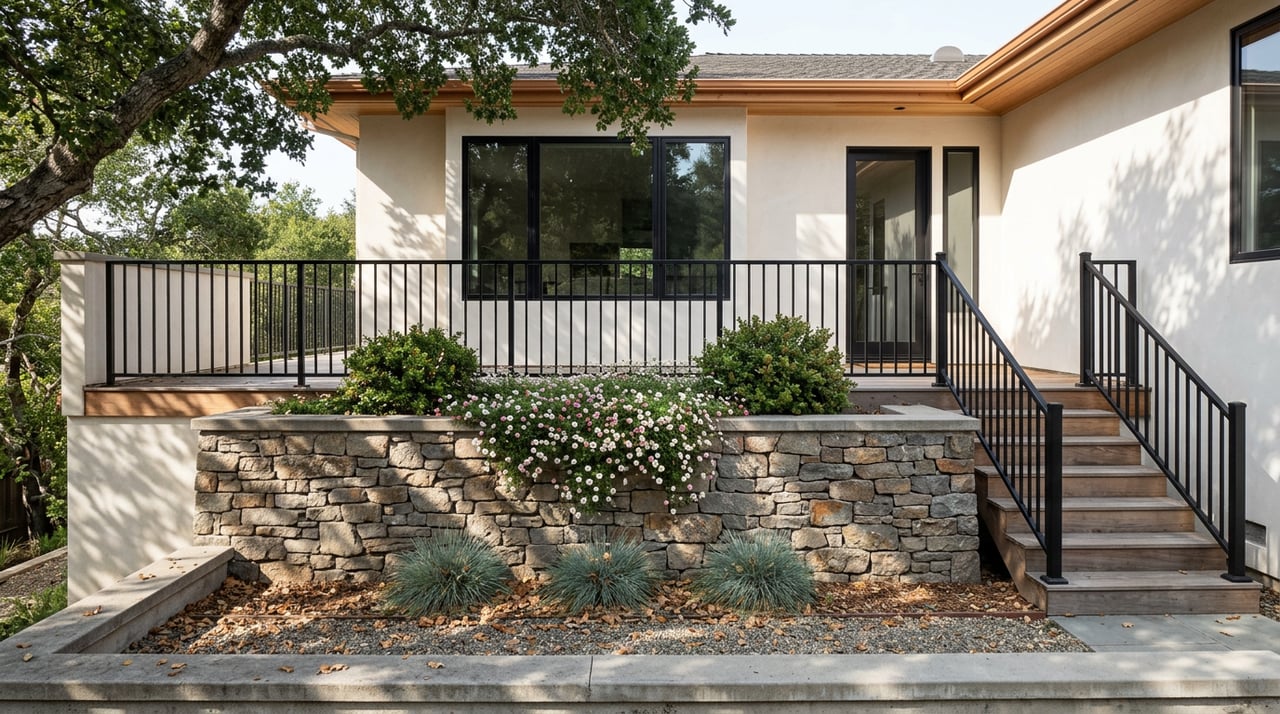
Hillside lots in Lafayette often come with retaining walls, and the walls carry a second layer of exposure that has nothing to do with soil chemistry and everything to do with permits. The City of Lafayette requires special inspection for any retaining wall over four feet in height. Engineered hillside walls here typically run $150 to $300 per square foot depending on height and soil conditions, which is exactly the kind of number that makes a homeowner quietly skip the permit on a smaller wall built years ago.
An unpermitted wall isn't just a construction issue. It's a disclosure issue. The TDS asks about room additions, structural modifications, or alterations made without necessary permits, and a retaining wall holding back your side yard qualifies. If that wall was never inspected and it starts to show the drainage problems that untreated hillside walls eventually show, water pooling, a slight lean, cracking near the base, you're now disclosing two things at once: the wall's condition and its permit history.
Where this actually shows up on the ground
This isn't a citywide risk spread evenly across every listing. It concentrates in specific pockets. Happy Valley, Hidden Valley, and Burton Valley all sit on terrain where retaining walls are common enough that local contractors name them specifically as areas where hillside slopes require engineered support. So do the corridors closer to the Briones Regional Park entrance, where elevation changes are part of the appeal and part of the maintenance load.
There's a separate layer worth knowing about if your property sits in Acalanes Ridge or Silverwood. Both have HOA or Design Review Commission oversight that governs exterior finishes, including driveway texture and color on hillside lots. That doesn't change your soil disclosure obligations, but it does mean a pre-listing retaining wall or drainage fix in those neighborhoods may need design review sign-off before a contractor breaks ground, which adds a step most sellers don't budget time for.
Why a fast market makes the timing problem worse, not better
Lafayette's resale market has stayed competitive through 2026. Over the three months ending July, homes here sold in a median of 13 days, down from 15 the year before, with 86 homes selling that month compared to 77 a year earlier. That pace is good news for a seller's negotiating position. It's bad news for a seller who hasn't dealt with the soils question before listing, because a 13-day market doesn't leave room to order a geotechnical review after an offer arrives. By the time a buyer's inspection turns something up, you're already past the point where you controlled the timing, and you're negotiating from inside someone else's rescission window instead of outside it.
The fix isn't complicated. It just has to happen in the right order. A geotechnical or soils reconnaissance ordered before your home goes live gives you the finding on your own schedule. From there you have three real options: repair the issue before listing, disclose it and price the home to reflect it, or disclose it and let a strong Lafayette market absorb the conversation the way markets do when sellers are upfront. All three beat finding out mid-escrow.
This is precisely the kind of friction that a concierge approach exists to catch early rather than late. When a pre-listing walkthrough surfaces a drainage issue behind a retaining wall or a foundation seam tied to seasonal clay movement, having a plan to fund and manage that repair before the home hits the market, rather than scrambling once a buyer's inspector finds it, is what turns a disclosure headache into a line item you controlled from the start.
Frequently asked questions
Does a geotechnical report expire? There's no statutory expiration date, but conditions on the ground change with each wet season. A report that's several years old on a hillside lot with active drainage issues may no longer reflect current conditions, which matters if you're relying on it to complete your disclosure accurately.
My neighbor already had a soils report done on their lot. Can I use it? No. Soil conditions vary lot to lot even on the same street, and a report is tied to the specific parcel, boring locations, and structures it evaluated. A neighbor's report tells you the area has hillside soil conditions worth taking seriously. It doesn't substitute for your own.
What if I skip the report entirely and just answer the TDS from memory? You're allowed to. California law only requires sellers to disclose known defects, with no legal obligation to seek out a report. But "known" is doing a lot of work in that sentence, and skipping the report doesn't remove the soil movement, the unpermitted wall, or the buyer's right to walk if something surfaces after you've already signed a contract.
If you're weighing a sale on a Lafayette hillside lot and want a clear read on your disclosure timeline before you list, reach out to Linda Ngo for a free home evaluation. Getting the soils question answered on your terms, instead of a buyer's, is the difference between a negotiation and a reopening.